Dylan returns to Mustang Prairie and opens The Lounge
It Must Be Love: A Mustang Prairie RomanceDylan returns to Mustang Prairie and opens The Lounge as part of a deliberate attempt to leave behind the violence, vigilance, and emotional isolation of his former life. The bar is more than an investment after retirement: it is the setting in which he becomes a permanent resident of the town, develops an unprecedented friendship with Sadie, and tests whether starting over can mean something more substantial than simply changing occupations.
Return to Mustang Prairie
Dylan’s return is tied to a place he had not visited since leaving at fifteen. His father, Maurice Parker, had abandoned an academic career after four years, finding it impossible to live on the fifty thousand dollars a year that followed the loss of his business income and allowance. The Parker family consequently left Mustang Prairie behind, turning the town into a distant memory for everyone except Dylan. He never forgot its tree-lined streets, its modestly maintained homes, and the neighbors who welcomed one another with homemade casseroles whose ingredients were sometimes mysterious but whose generosity was unmistakable.
The town also preserved a version of Dylan that had not been defined by his father’s expectations. As a teenager, he had played football there, and the townspeople had cheered for him without demanding that he follow Maurice Parker into academia. Their acceptance mattered because it allowed Dylan to imagine himself apart from the career chosen or valued by his family. When he returns, nearly the whole town visits his home or bar to welcome him and congratulate him on his distinguished career. Some residents even thank him for putting Jebediah Wainwright behind bars, praise that makes him proud but uneasy because it turns his difficult professional history into a public achievement.
The Lounge and a New Occupation
Owning a bar proves more demanding than Dylan expected when he first considered it a good investment after retirement. The Lounge requires inventory checks and the constant practical work of running a business; on some occasions Dylan also serves as bartender. The bar therefore gives his new life a concrete structure rather than functioning merely as a symbol of retirement. Its customers, its stock, and its physical arrangement draw him into the rhythms of Mustang Prairie and make his return visible to the community.
The Lounge also becomes a place where other people’s lives gather. Sadie and Trixie Beaumont can commandeer its large round booth, whose unusual position across from the bar is explained by its usefulness for large parties that need easy access to the drinks. The detail captures the establishment’s dual identity: it is Dylan’s livelihood, but it is also a communal room where friendships, celebrations, and private disclosures unfold. The bar’s hospitality extends beyond business, making it one of the spaces through which Dylan is absorbed back into the town.
From Police Vigilance to Civilian Life
Dylan’s move south changes him at the level of reflex. In the city, violence and sirens had made danger feel continuous, and he had been accustomed to carrying a gun at his waist. In Mustang Prairie, he walks at night without reaching for a weapon whenever a patron enters the bar. The absence of the gun is a small physical fact with a large psychological consequence: the object that once organized his response to strangers no longer occupies his body or governs every encounter.
The old training has not disappeared completely. Dylan still tells Sadie to lock her doors and carry mace at least three times a day. The repetition is protective, but it also reveals how difficult it is for him to separate care from surveillance and friendship from professional caution. The maxim “Once a cop, always a cop” describes the persistence of those habits, yet Dylan internally rejects its finality. He is no longer a police officer; he is a full-time bar owner, an occasional bartender, and a resident of Mustang Prairie. The change is not presented as a clean erasure of the past but as a gradual renegotiation of what the past is allowed to control.
Friendship with Sadie
Sadie becomes the most important personal consequence of Dylan’s new life. Before Mustang Prairie, Dylan divided women into two categories: relatives and women he wanted to take to bed. He avoided sexual relationships with fellow officers because workplace drama could compromise professional boundaries. Friendship with a woman was therefore outside his established emotional vocabulary. Sadie breaks that pattern. She is intensely attractive to him, but she is also his best friend and, eventually, the closest friend he has ever had.
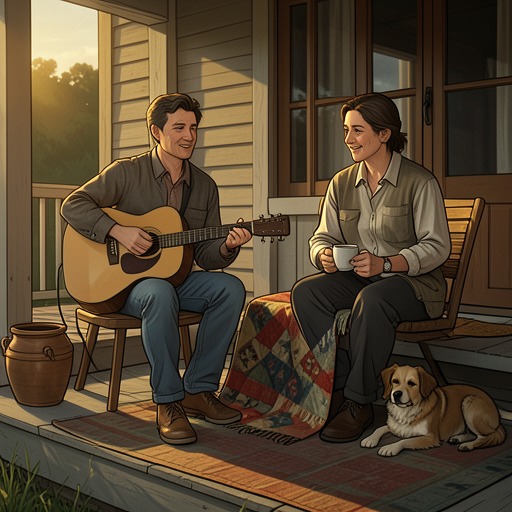
Their connection is built from ordinary forms of companionship that Dylan has not previously permitted himself. He can laugh with Sadie, watch sports with her, and play guitar in her company. The friendship does not eliminate his desire; instead, it makes desire harder to manage because he does not want to damage the relationship that gives his new life its greatest emotional ease. When Sadie flirts, asks him to approve plans for the bar, or appears at The Lounge with her characteristic confidence, Dylan must repeatedly remind himself not to cross the boundary he has drawn.
The bar’s role in their relationship is especially revealing. Sadie can lean across the counter, bargain with Dylan, and turn his refusal into a playful negotiation, while Dylan remains outwardly focused on inventory and inwardly distracted by her beauty. His resistance is not indifference. It is an effort to protect a form of intimacy he has never had before, even as that effort creates unfulfilled desire. The Lounge thus becomes the site where professional responsibility and personal longing occupy the same counter.
Renewal and Narrative Significance
Dylan experiences Mustang Prairie as a place where he can become “a real person” rather than someone merely moving through the dark and grimy underside of urban life. His return is consequently a moral and emotional reset, not only a geographic relocation. The town’s welcome, the bar’s daily labor, and Sadie’s friendship together give him access to a life organized around participation rather than response: he hosts, listens, walks, plays music, and allows himself to be known.
His most explicit ambition is to prevent darkness from consuming him. He imagines that darkness fading to gray and eventually becoming white, and he resolves to learn how to bask in the light and do everything right. The image acknowledges both the damage he carries and the incompleteness of his recovery. Dylan does not claim that the past has vanished; he claims the right to build a future in which it no longer dictates his identity.
In that sense, Dylan’s return and the opening of The Lounge form a transition from public violence to private community. The bar gives him economic independence, but its deeper function is restorative: it places him among people who remember him, welcome him, and value him outside the authority of his former badge. His new life remains complicated by attraction, habit, and the burden of praise, yet Mustang Prairie offers the first credible setting in which Dylan can begin again without surrendering the parts of himself that survived the old life.